How Are Peptides Examined? Hplc, Coa & Pureness Discussed 2026
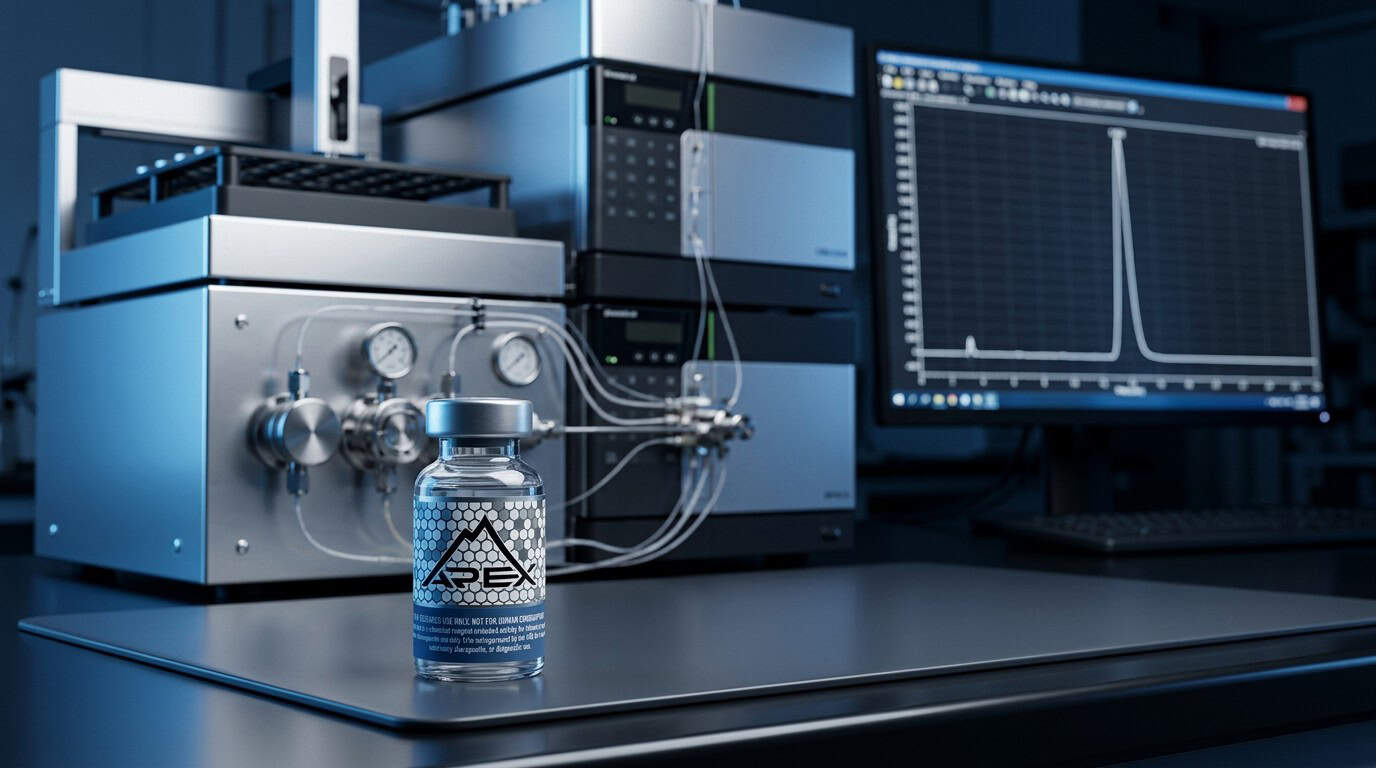
Peptide Screening: Hplc & Mass Specification Purity Guide Pinnacle Ion chromatography can additionally divide ionic substances, ion-exchange separation modes, and not natural anions or cations. Our projects with NorthEast BioLab include successful technique growth, recognition, security studies during Professional Stage I-- IV research studies. All compounds discussed in this short article are intended strictly for in-vitro research study and laboratory use only. They are not meant for human usage, veterinary use, or any type of professional application. Researchers are accountable for making sure conformity with all suitable guidelines in their jurisdiction. Reversed-phase chromatography provides the fastest picture of family member pureness. By confirming molecular structure and pureness, we aid scientists preserve reproducibility and adhere to governing criteria. Our logical remedies offer self-confidence in every peptide batch, lowering speculative threat and sustaining both preclinical and professional applications where accuracy is vital for success. It is taken into consideration the gold-standard method for assessing just how much of a sample is the preferred peptide versus pollutants [2] For example, a peptide at 95% purity still consists of ~ 5% spin-offs that could disrupt sensitive experiments if undiscovered [2] By utilizing HPLC to make certain a peptide is, say, 98-- 99% pure, scientists greatly decrease the risk of such confounding variables. NorthEast BioLab offers a complete variety of HPLC screening solutions to sustain your drug exploration and development. We make use of the HPLC assay to examine your medication compounds' pharmacokinetics, pharmacodynamics, safety and security, effectiveness, or effectiveness in appropriate organic and solution matrices. These products have not been evaluated by the Fda (FDA) and are not planned to diagnose, deal with, treat, or avoid any type of disease or medical problem. Dose info, reconstitution guides, and protocol recommendations are based upon released research study literature and are offered study referral just. Tests ought to include using verified logical methods to analyze identity, purity, strength, and stability at every phase of the product's advancement and usage. We frequently utilize gradient elution in peptide purity analysis, that is, the percentage of organic stage (generally acetonitrile) in the eluent slowly raises with time. Due to the fact that the price of enhancement of organic phase has a substantial Quality Standards effect on the pureness outcome. We normally make use of a gradient elution method every minute (the concentration of acetonitrile boosts by 1% every min, v/v), which can prevent the overlap of sample peaks and contamination optimals and boost the accuracy of analysis results. This post is provided for educational and research referral objectives only.
Frequently Asked Concerns (Faqs) Concerning Hplc In Peptide Validation
Whether you operate in a lab or prepare data for CMC paperwork, understanding how to test peptides for pureness is important for generating credible outcomes. HPLC screening measures peptide purity by dividing the target compound from contaminations, synthesis by-products, and destruction items. The test evaluates what percentage of the example is the real peptide versus contaminants. Authentic research study peptides come with a Certification of Analysis showing HPLC pureness screening and mass spectrometry results from an independent lab. You can verify credibility by checking the COA verification code through the screening laboratory's site.Our Logical Strategies
Just how much time does an HPLC test take?
Time Required for HPLC EDTA Examination Records + Next Actions
BPC-157 TB-500 Blend Once you have scheduled the examination and the phlebotomist has actually collected your blood sample, the sample is taken to the lab, where the test is carried out. It normally takes 24-48 hours for the examination report to be created.
- HPLC and Mass Spectrometry provide the gold-standard guarantee that what remains in the vial is pure, exact, and precisely what the tag says.
- Request information on instrumentation, discovery limitations, and validation status prior to submitting examples.
- With logical testing, suppliers can verify that peptide-based medications satisfy regulative criteria.
- Convert vial strength, water quantity, and referral dose into specific syringe systems.
- For peptide purity screening, reverse-phase HPLC is the typical conceptual design.