Acs Peptide Testing Laboratories Third-party Peptide Evaluation
Understanding Peptide Purity Testing
Comprehending Peptide Pureness Testing
- In addition, techniques such as amino acid evaluation and HPLC are utilized to confirm the peptide's identity and purity, making certain precise characterization for various applications.
- Contact us today to review your peptide series, example standing, and logical purposes.
- It functions as a pointer and lawful disclaimer that the product is not a healing or palatable.
- This short article will break down how peptide purity is measured, why it's distinct from peptide identity, what the usual pureness levels (95%, 98%, 99%) represent, and what "research-grade" suggests in method for peptide reagents.
- Net peptide content describes just how much real peptide (by weight) is in the vial relative to non-peptide elements like water, counter-ions (e.g., TFA), or buffer salts.
- We support targeted evaluation of relevant residuals based upon the job and example history.
If you have actually ever browsed a peptide catalog, you have actually seen pureness numbers all over. These numbers obtain thrown around so often that it's simple to play down them-- just one more specification on an item page. Chameleon Peptides markets research study substances solely for research laboratory and logical functions. All PRG items are planned solely for artificial insemination research or more manufacturing use. Making use of a highly detoxified peptide minimizes these dangers and enhances the integrity of your data.
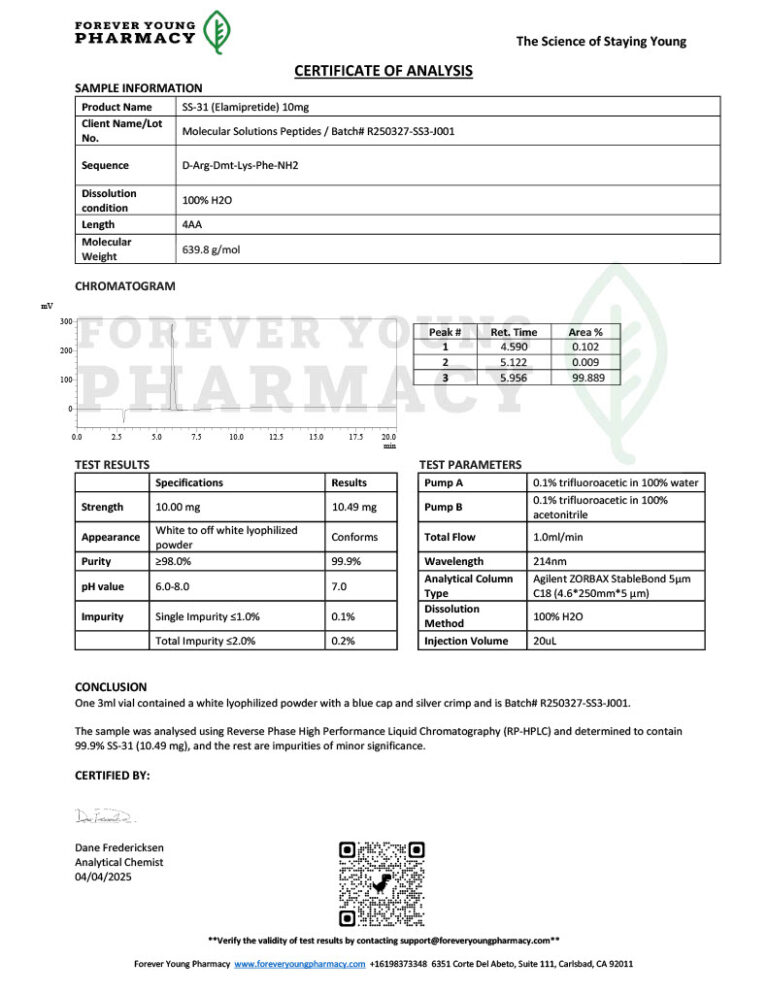
The top quality and dependability of a peptide pureness dimension depend upon approach parameters and paperwork high quality. The mobile stage, typically a blend of water, acetonitrile, and an acid modifier, is saved in tanks and provided through the system by a high-pressure pump. The pump keeps accurate circulation prices, frequently in the range of 0.5 to 2.0 mL/min depending on the method and column layout. High stress compels the mobile phase with snugly loaded bits inside the column, creating https://peptides-uk.org/ sharper splittings up and greater resolution than typical low-pressure chromatography.Residuals Screening
Picking the appropriate outside laboratory for peptide testing involves reviewing a number of elements. A relied on laboratory must have verifiable experience in peptide chemistry evaluation-- as an example, PhD-level chemists or biochemists on personnel who understand peptides' synthesis and destruction paths. Certification by appropriate bodies (such as ISO/IEC or qualification for GLP/GMP compliance) is a solid sign of quality.HPLC steps chromatographic purity by dividing the target peptide from related impurities and calculating main-peak location percent. Mass spectrometry confirms molecular identification by checking whether the determined mass matches the anticipated peptide mass. For research-grade peptide certification, HPLC and LC-MS/ESI-MS solution various concerns and should read together. BOC Sciences likewise gives detailed artificial insemination (cell systems) and in vivo (pet platforms) screening solutions to aid customers totally comprehend peptide formulation performance in different atmospheres. Artificial insemination examinations evaluate peptide cytotoxicity, cell uptake, anti-inflammatory task, and more, offering basic information support for peptide applications in medical visual appeals and biomedical areas.
With each other, these analytical methods give the evidence base for wrapping up that a peptide set appropriates for research study use. Another associated term you may encounter is net peptide content, which is various from pureness. Web peptide content describes just how much actual peptide (by weight) remains in the vial relative to non-peptide parts like water, counter-ions (e.g., TFA), or barrier salts.